
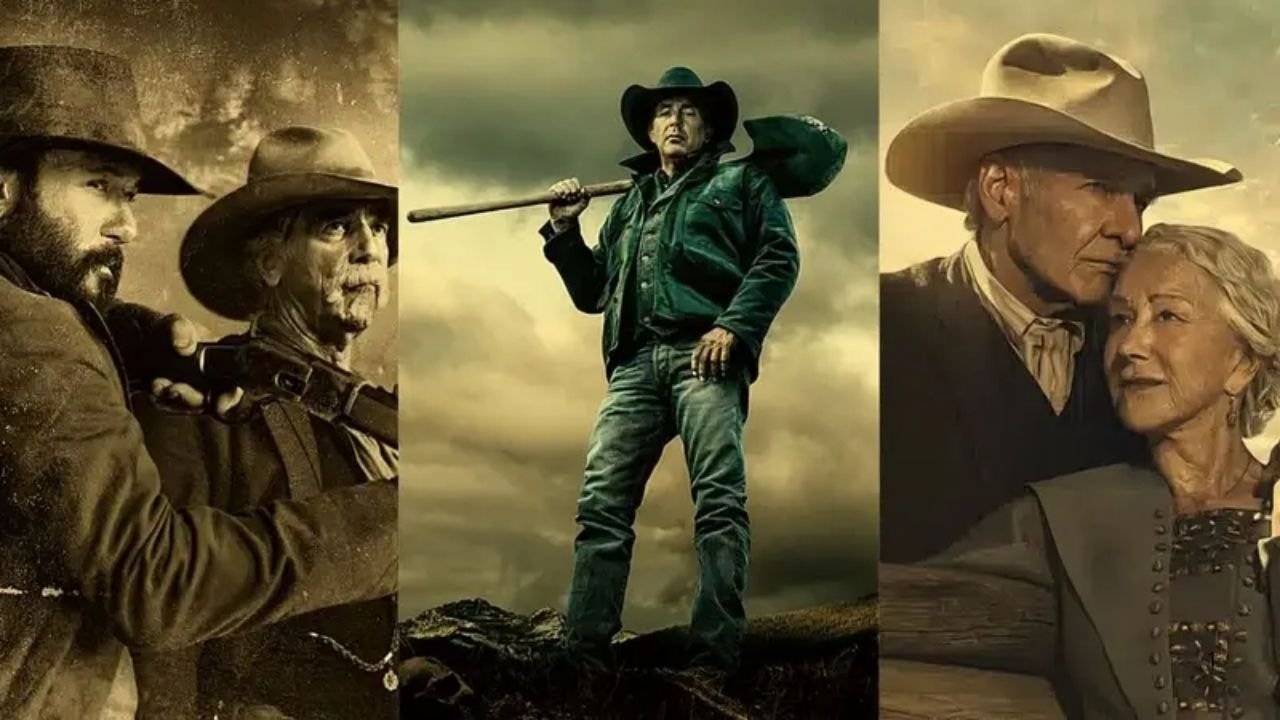
Since its debut in 2018, Yellowstone has become a defining modern Western, captivating audiences with the trials and triumphs of the Dutton family. But the story doesn’t end there. Creator Taylor Sheridan expanded the saga with prequels 1883 and 1923, creating a multi-generational narrative that explores the Duttons’ origins, struggles, and enduring legacy. Here’s a clear guide to how these series connect.
1. The Dutton Family Legacy
At the heart of every series is the Dutton family and their fight to protect their land:
- 1883: James Dutton (Tim McGraw) leads his family from Texas to Montana, establishing the Yellowstone Ranch.
- 1923: Jacob Dutton (Harrison Ford) and Cara Dutton (Helen Mirren) navigate Prohibition, drought, and societal change, securing the ranch’s future.
- Yellowstone: John Dutton defends the modern-day ranch against political, corporate, and personal threats.
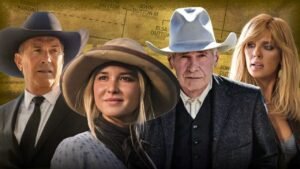
Family connections span generations: James is John’s great-grandfather, and Elsa Dutton from 1883 is his great-aunt. Their stories show resilience, sacrifice, and the building of a lasting legacy.
2. Moral Dilemmas Across Time
Each Dutton generation faces ethical challenges and personal struggles:
- Elsa (1883) learns courage amid hardship.
- Spencer (1923) returns from war with a strong moral compass.
- Kayce (Yellowstone) balances family duty with personal desires.
These internal conflicts create compelling, relatable characters who act as reluctant heroes.
3. The Yellowstone Ranch: More Than Land
The ranch is central to the story:
- 1883: Founded through hardship and determination.
- 1923: Expands into a thriving cattle empire.
- Yellowstone: Threatened by developers, corporations, and government forces.
It symbolizes family identity, heritage, and the sacrifices made across generations.
4. Traditions, Heirlooms, and Cultural Bonds
Objects and customs link the Duttons’ past to the present:
- Elsa’s Comanche knife passes to Spencer (1923), symbolizing legacy.
- Relationships with Native American tribes reflect historical alliances and conflicts.
- Family traditions and heirlooms maintain continuity across series.
5. Outsiders and Changing Times

Each era explores the clash between old values and new challenges:
- 1883: Pioneers face lawlessness and wilderness threats.
- 1923: Society modernizes with new technology and social changes.
- Yellowstone: Corporations and politics challenge the traditional West.
This struggle shapes the Duttons’ decisions and their survival strategies.
6. Horses and Western Spirit
Horses symbolize freedom, tradition, and the Western lifestyle:
- Migration in 1883
- Ranch work in 1923
- Rodeo culture in Yellowstone
They emphasize continuity and the family’s deep connection to the land.
7. War and Leadership
Conflict molds the Dutton leaders:
- James Dutton survives the Civil War.
- Spencer emerges from World War I hardened and determined.
- Kayce returns from Iraq, shaping his leadership and protective instincts.
FAQs
Q1: Do I need to watch 1883 or 1923 first?
A1: No, but prequels enhance understanding of the Dutton legacy.
Q2: Are all spin-offs directly connected to Yellowstone?
A2: Yes, each series explores a different generation of the family.
Q3: Who is Elsa Dutton?
A3: She is James Dutton’s daughter in 1883 and John Dutton’s great-aunt.
Q4: How do Native American tribes feature?
A4: They are both allies and rivals, influencing land disputes and relationships.
Q5: Why is the ranch so important?
A5: It represents the Duttons’ heritage, identity, and sacrifices over generations.
Conclusion
The Yellowstone universe is a sweeping, multi-generational epic of family, sacrifice, and land. From 1883 to 1923 and modern Yellowstone, each series enriches the narrative, showing how the Duttons’ choices and struggles shape a legacy that endures across centuries.